

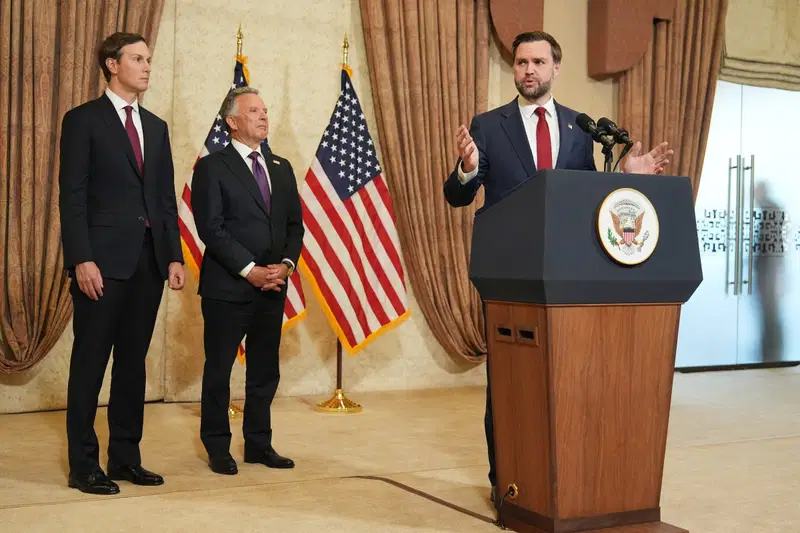
The United States and Iran failed to reach an agreement to end the escalating Middle East war, with US Vice President JD Vance declaring Sunday that Washington has now put forward its “final and best offer” after marathon negotiations in Islamabad.
Vance said the US is demanding a “fundamental commitment” from Tehran that it will not develop a nuclear weapon, but admitted “we haven’t seen that” despite what he described as the highest-level engagement between both sides since the 1979 Islamic Revolution. Still, he signaled that the door remains open, noting Iran would have time to consider the proposal.
The talks, hosted by Pakistan, come amid a fragile pause in hostilities after Washington announced a two-week halt to attacks with Israel to allow negotiations. Pakistan urged both sides to respect the truce and said it would continue facilitating dialogue.
Iranian state broadcaster Islamic Republic of Iran Broadcasting reported the negotiations stalled over what it called “unreasonable demands of the American side,” while a foreign ministry spokesman cautioned that “no one” should expect a breakthrough after just one session following weeks of war.
The conflict erupted after the United States and Israel launched strikes on Iran on February 28, triggering retaliation from Tehran that has shaken the Middle East and rattled the global economy.
Tensions were evident throughout the talks, with Iran accusing Washington of making “excessive demands” over the strategic Strait of Hormuz—a vital artery for global oil shipments that Iran effectively shut during the conflict.
US President Donald Trump struck a defiant tone during the negotiations, insisting the US had already secured victory on the battlefield. “Whether we make a deal or not makes no difference to me. The reason is because we’ve won,” he said.
After 21 hours of intense discussions, Vance confirmed no deal had been reached. “We leave here with a very simple proposal, a method of understanding that is our final and best offer. We’ll see if the Iranians accept it,” he said before departing Pakistan.
Pakistan’s Foreign Minister Ishaq Dar reiterated Islamabad’s commitment to diplomacy, saying the government would “continue to play its role to facilitate engagement and dialogue between the Islamic Republic of Iran and the United States of America in the days to come.”
Meanwhile, separate regional tensions continue to simmer. Israel is set to hold talks with Lebanon next week in Washington, where Prime Minister Benjamin Netanyahu said he is seeking a peace deal that “will last for generations,” even as Israel rules out a ceasefire with Hezbollah and signals continued pressure on Beirut.
