

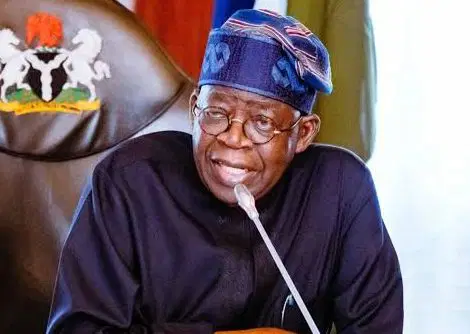
The Special Adviser to President Bola Ahmed Tinubu on Economic Affairs, Tope Fasua, has insisted that Nigeria’s biggest problem is not poverty but inequality, expressing confidence that ongoing reforms will deliver results despite current hardships.q
Speaking on Channels Television on Friday, Fasua said: “Nigeria is not a poor country, but we have inequality challenges. We must focus on bridging that gap.”
He stressed that while poverty is real, the country must shift its attention toward practical solutions rather than constant pessimism. “The real question is how to solve poverty,” he said, warning that overemphasis on hardship “will not allow us to focus on what matters.”
To support his argument, Fasua pointed to signs of liquidity within the system, revealing that “about N4.6 trillion was raised by banks in this country recently for recapitalisation,” noting that “about 80 percent of it [came] from this country.”
He also highlighted the profitability of MTN in Nigeria, stating: “MTN has consistently generated about 40 percent of its profits from Nigeria. This shows there is money in the system.”
Fasua, however, acknowledged deep structural imbalances. “We may have a scenario where many people are making money, many people are poor, so we need to bridge the gap,” he said, adding that informality remains a major challenge.
According to him, “about 70 percent of this economy is informal,” a situation he said the government aims to address through tax reforms to capture lost revenue.
He urged Nigerians to support these efforts, saying: “Let people pay their taxes… so that we can even out the income inequality in this country.”
Defending the Federal Government’s 2026 fiscal plan, Fasua described the ₦68.32 trillion budget as ambitious and forward-looking. “We should commend Mr. President for thinking big for the people of this country,” he said, noting that “for the first time we’re having about 50 percent capital budget… This is a government that is going somewhere.”
On concerns about budget overlaps, he dismissed criticisms, stating: “Budget overlaps are not new… once the law has been made, it has to be implemented.”
He also pushed back against fears over borrowing, insisting: “Nigeria is not over-borrowed… our debt is sustainably managed.”
Despite acknowledging that reforms will not be easy, Fasua remained upbeat about the country’s direction. “This country has potential for so long, but this is the time,” he said, assuring that reforms “will yield results.”
“It is not going to be a walk in the park… but it is doable,” he added.
