
BY CHARLES CHIJIOKE
The internal crisis within the All Progressives Congress (APC) in Taraba State has escalated sharply after a former Minister of Power, Saleh Mamman, openly rejected the party’s proposed consensus arrangement for selecting candidates ahead of the 2027 general elections, insisting that direct primaries remain the only credible path to internal democracy.
Mamman, who is also a governorship aspirant, aligned himself with aggrieved party members and media volunteers pushing back against what they describe as an attempt to impose “unity candidates” through consensus committees recently set up across the state’s three senatorial zones. He argued that the approach runs contrary to repeated assurances of internal democracy by the APC national leadership and President Bola Tinubu.
According to him, while consensus may appear efficient, it risks deepening mistrust, alienating grassroots stakeholders, and triggering post-selection disputes that could weaken the party’s electoral strength. He maintained that allowing members to freely choose candidates through direct primaries would better preserve unity and legitimacy within the party structure.
The controversy intensified after the APC leadership in Taraba inaugurated consensus committees tasked with producing “unity candidates” for various positions. The decision was immediately rejected by a coalition of aspirants, grassroots members, and a group of APC media volunteers who claim to represent a large majority of the party’s communication structure in the state. The coalition warned that the process was exclusionary and could destabilise the party ahead of the elections.
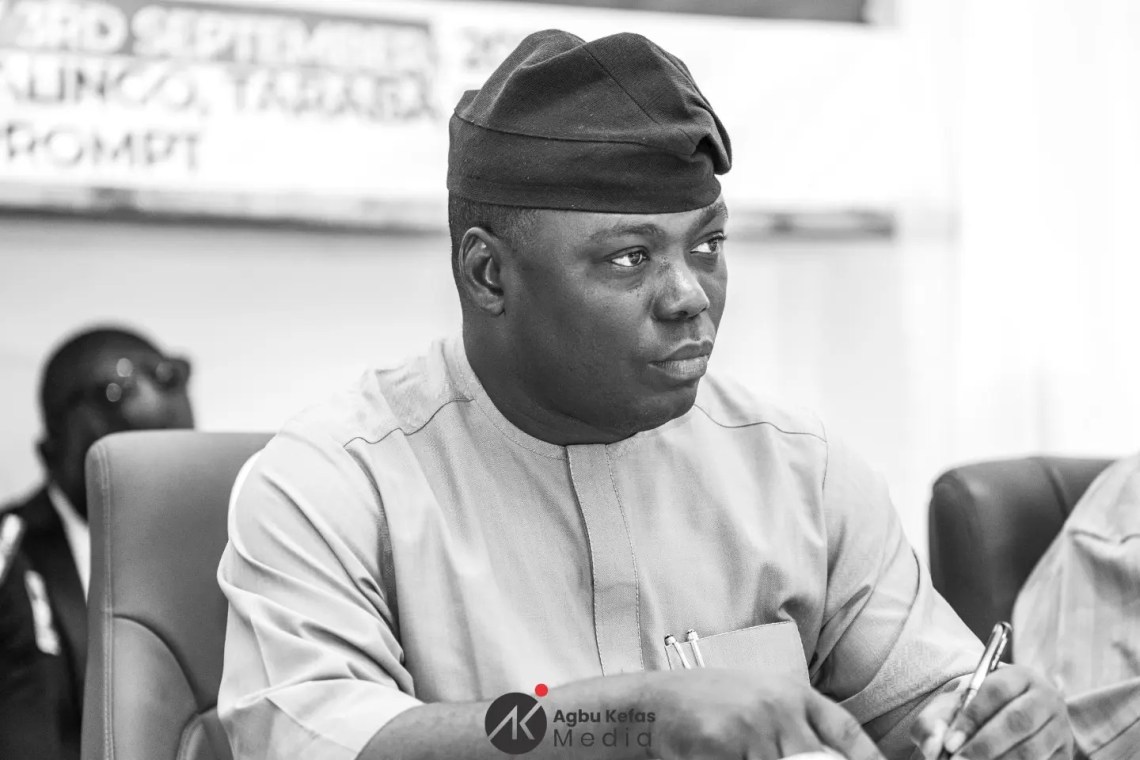
Tensions have also been heightened by the political realignment in the state following Governor Agbu Kefas’s defection from the Peoples Democratic Party (PDP) to the APC earlier in the year, along with several party and government officials. His move has added a new layer of complexity as the ruling party attempts to merge incoming political blocs with its established structures.
Mamman, who was absent from the stakeholders’ meeting that produced the consensus committees, questioned the legitimacy of the exercise and reiterated his belief in competitive primaries. He also referenced his long-standing involvement in the party’s formation, tracing his political background to the defunct Congress for Progressive Change (CPC) that merged into the APC.
The political dispute has now spilled into the courts, further exposing divisions within the state chapter. The Federal High Court in Jalingo recently granted an order for substituted service on the APC state chairman, Abubakar Bawa, in a suit challenging the outcome of the party’s chairmanship primary.
The case was instituted by aspirant Abdulhadi Lau, who alleged irregularities and claimed the process did not provide a level playing field for contestants. Counsel to the plaintiff, Pius Pius, said repeated attempts to personally serve the APC chairman failed, prompting the court’s approval of substituted service. The matter has been adjourned to June 8 for further hearing.
Political analysts say the combination of internal resistance to the consensus plan and ongoing litigation reflects widening fault lines within the Taraba APC. They warn that unresolved grievances over candidate selection could weaken party cohesion, disrupt mobilisation efforts, and increase the risk of defections ahead of 2027.
As the party struggles to manage competing interests between old members and new entrants, observers argue that its handling of both the consensus controversy and court battles may ultimately determine its electoral strength in Taraba State.
