

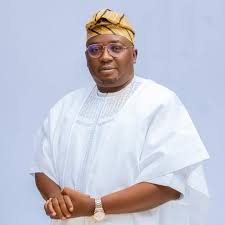
Bayo Adelabu, minister of power, will resign his appointment “in the coming days” as he positions himself for a governorship bid in Oyo State ahead of the 2027 general election.
Tunji Bolaji, special adviser on strategic communications and media relations to the minister, disclosed that Adelabu informed President Bola Tinubu of his decision during a meeting on Tuesday, with the president reportedly giving his blessing.
“In view of this development, Chief Adebayo Adelabu is expected to resign his position as Minister of Power in the coming days,” the statement from Bolaji reads.
“The timing of his anticipated resignation reflects his commitment to addressing key sectoral challenges and ensuring continuity in ongoing reforms prior to exiting office.
“Notably, this includes efforts to stabilise the sector following recent declines in power generation due to gas supply constraints to power plants, ongoing pipeline repairs, and outstanding obligations to gas suppliers, as well as the need to secure the President’s approval for his intended resignation and gubernatorial aspiration in Oyo State.”
Why it matters: Adelabu’s exit comes at a delicate time for Nigeria’s struggling power sector, where instability in electricity supply continues to frustrate households and businesses. His resignation could disrupt ongoing reforms or open the door for a fresh approach just as the government battles gas shortages and infrastructure setbacks. Politically, it signals that the 2027 race is already heating up, with key figures leaving federal roles to build state-level war chests.
Public reaction: Early reactions are mixed. Some Nigerians see the move as typical political ambition overriding national duty, especially given the fragility of the power sector.
Others argue that Adelabu has the right to pursue elected office and may even bring federal-level experience to Oyo politics. Critics, however, question whether enough progress has been made in the power sector to justify an exit at this stage.
For Oyo State, this sets the stage for a high-stakes governorship contest that could reshape the state’s political alignment. For the broader Nigerian public, it reinforces a familiar pattern—public office as a stepping stone to electoral ambition, while everyday citizens still grapple with erratic electricity supply.
In the short term, there could be policy uncertainty within the power ministry, especially if leadership transition is not seamless. Medium-term, Adelabu’s move may trigger a wave of similar resignations as other politicians reposition for 2027. Long-term, his candidacy could redraw political alliances in Oyo and test the influence of federal backing in state elections.
One thing is clear—this story is far from over.
