

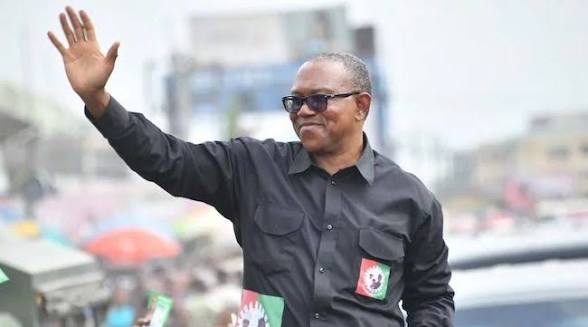
Love him or hate him, one thing is becoming harder to dismiss, Peter Obi is not a fluke, and he’s not fading away. As 2027 draws closer, the real question is no longer whether he will contest again, but whether Nigeria’s entrenched political order can withstand what he represents.
The 2023 election changed the script. Obi secured over six million votes and pulled off shocking wins in places like Lagos and Abuja, all without the deep-rooted machinery of the All Progressives Congress or the Peoples Democratic Party. That wasn’t just a performance, it was a disruption.
For the first time in years, a candidate outside the traditional power blocs didn’t just participate; he seriously threatened the system.
What makes this even more unsettling for the establishment is the nature of his support. Obi didn’t rely on the usual patronage networks or political godfathers. Instead, he rode on the back of a restless, digitally savvy youth population that turned his campaign into something closer to a movement than a candidacy. In a country where young people make up the majority, that kind of organic momentum is unpredictable and dangerous to a system built on control.
Then there’s the perception factor. In a political environment where corruption allegations are almost routine, Obi has managed to position himself rightly or wrongly as a symbol of discipline and prudence. His constant refrain that Nigeria is “not poor but mismanaged” resonated deeply with citizens frustrated by years of economic hardship and governance failures. Whether one fully buys into that image or not, it has stuck, and in politics, perception is often more powerful than reality.
Perhaps more intriguing is the gradual shift in his reception beyond his traditional base. For years, critics dismissed him as a regional candidate with limited northern appeal. But that narrative is beginning to crack. Engagements across northern states, coupled with endorsements and softer rhetoric from some northern voices, suggest he is at least being taken more seriously than before.
In Nigerian politics, that alone is a significant development.
Still, it would be naïve to assume momentum automatically translates to victory. Nigeria’s elections are rarely decided by popularity alone. They are shaped by alliances, structures, and the kind of political muscle that doesn’t trend on social media. Obi’s 2023 outing proved both his strength and his limitation: he could inspire millions, but inspiration alone wasn’t enough to win power.
Yet that is precisely why he remains a concern to the political establishment. A candidate who could come that close without the traditional tools of Nigerian politics represents a new kind of threat one that doesn’t fully play by the old rules. If he manages to retain the loyalty of young voters, expand his reach in the North, and, crucially, build the kind of alliances he lacked before, 2027 could become far more than a routine election cycle.
It could become a referendum on whether Nigeria is ready to move beyond its familiar political patterns or whether those patterns are still too deeply entrenched to break.
Emeka Eze writes from Abuja
