
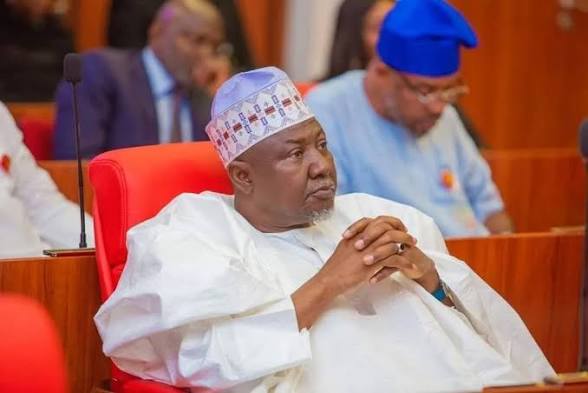
The Chairman Senate Committee on Legislative Compliance, Senator Garba Musa Maidoki, has blamed the failure of the Senate to consider recommendations of his Committee for the continued disregard of resolutions passed by the National Assembly.
Senator Maidoki who represents Kebbi South district in the National Assembly spoke following concerns raised by Senators during plenary on Tuesday over the frequent failure of ministries, departments and agencies (MDAs) to honour invitations from the Senate and implement resolutions reached after motions and debates.
Afrilensnews reports that Senator Abdul Ningi had drawn attention to the recurring non-compliance by government agencies, prompting questions about the way forward from Maidoki, who chairs the Senate Committee on Legislative Compliance.
Responding to journalists after plenary in his office, Maidoki said the committee had submitted a report detailing its activities over the past three years, including recommendations designed to address the persistent gaps in compliance with Senate resolutions.
The lawmaker lamented that the report, which was laid before the Senate, had yet to be debated or considered by lawmakers. “For the first time, the Committee on Legislative Compliance has submitted a report detailing its activities for the last three years. That report was laid in the Senate. But unfortunately, in the wisdom of the Senate, that report has never been debated. Nobody looked at our recommendations,” he said.
The senator explained that the committee had earlier organised a seminar involving MDAs and the National Assembly to clarify the responsibilities of government institutions and improve understanding of legislative resolutions.
According to him, although Senate resolutions are not laws and do not carry the same legal force as legislation, they represent the concerns and expectations of Nigerians expressed through their elected representatives.
He said such resolutions are intended to guide policymakers and government agencies in adjusting their programmes to address issues affecting citizens across the country.
“We are politicians. When we do resolutions, because we are representing people, diverse in the whole of this country, we are telling policymakers, we are telling governments and parastatals of government that this is the thinking of Nigeria. We want you to recalibrate your programme so that you can address these issues,” Maidoki stated.
The lawmaker also identified budgetary constraints as a major obstacle to the implementation of some Senate resolutions, explaining that government agencies may struggle to execute directives involving activities that were not captured in the approved budget.
He noted that activities scheduled for 2027 would require budgetary provisions in 2026, warning that resolutions passed after the relevant appropriation had been finalised could face funding difficulties.
“If you bring an activity that is going to take place after the budget has been approved, that means that item is no longer in the budget. And if it is not in the budget, where would the money come from to finance that activity?” he asked.
Maidoki disclosed that the committee had recommended that Senate resolutions which were not implemented should be given priority in subsequent appropriation exercises to ensure that the necessary funds were provided.
He expressed disappointment that the Senate had yet to examine the proposal, arguing that consideration of the report would help lawmakers identify institutional gaps and develop practical measures to improve compliance.
The senator further described the President of the Senate as the chief compliance officer of the Senate, stressing that the committee’s responsibility was to provide the necessary recommendations and tools to strengthen oversight and ensure that government agencies respond appropriately to legislative decisions.
