
BY CHARLES CHIJIOKE
The Federal Government has pushed back strongly against claims that President Bola Tinubu’s administration borrowed between ₦75 trillion and ₦80 trillion, with Minister of Finance and Coordinating Minister of the Economy, Taiwo Oyedele, insisting the widely circulated figures are misleading and do not reflect the true state of Nigeria’s debt profile.
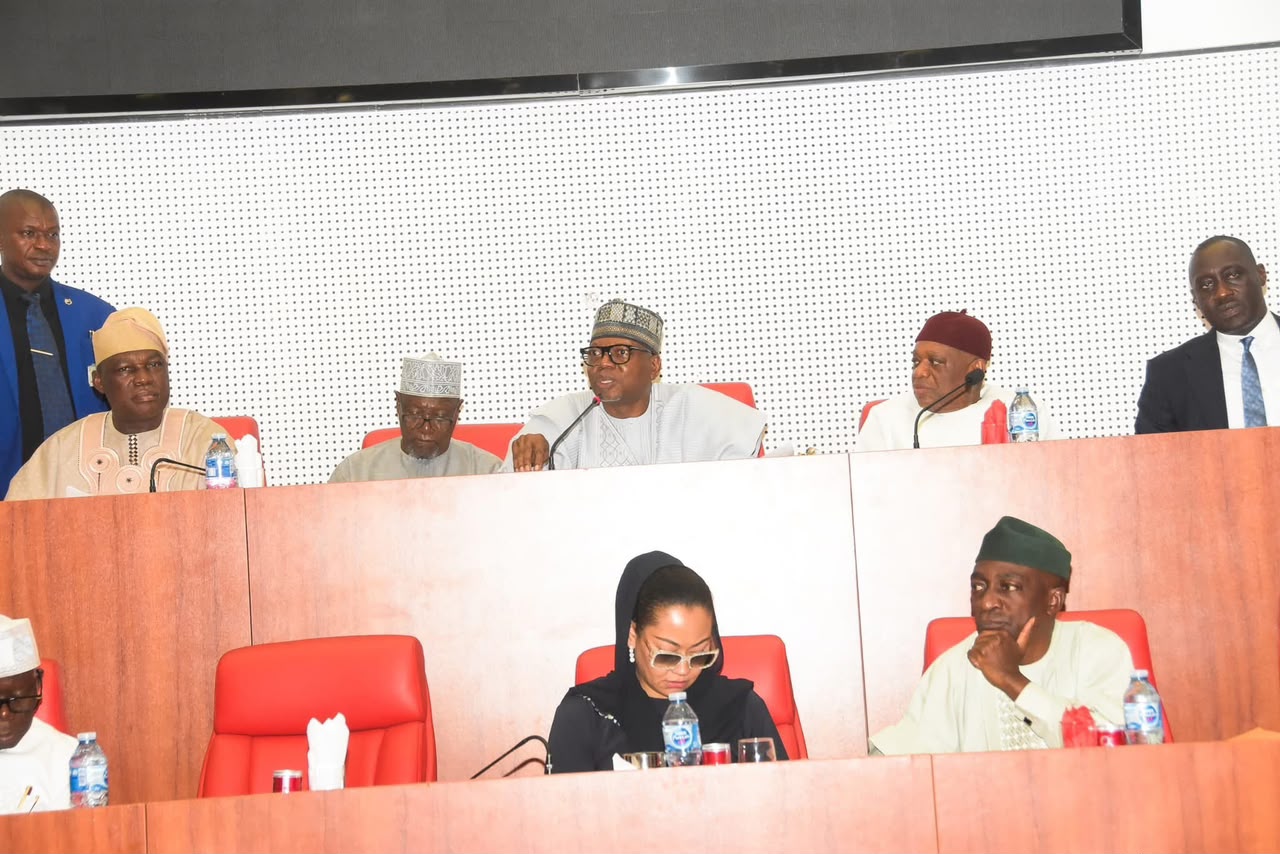
Speaking during an economic review session organised by the Senate Committee on Finance on Tuesday, Oyedele argued that the sharp increase in the country’s public debt stock was driven largely by the depreciation of the naira, inherited financial obligations and accounting adjustments, rather than fresh borrowing by the Tinubu administration.
Afrilensnews reports that the minister explained that Nigeria’s public debt stood at about ₦75 trillion when President Tinubu assumed office, stressing that many Nigerians wrongly compare that figure with the current debt stock and conclude that the present government borrowed the difference.
“When this administration came into office, public debt was around ₦75 trillion. Many people simply compare the number before and the number now and conclude that this government has borrowed so much. That is not correct,” Oyedele told lawmakers.
According to him, over ₦40 trillion was added to the country’s debt profile following the devaluation of the naira, which forced the revaluation of Nigeria’s foreign currency-denominated obligations.
He further explained that another ₦33 trillion entered the official debt stock after the National Assembly approved the securitisation of the Ways and Means advances obtained by the previous administration from the Central Bank of Nigeria.
Oyedele also dismissed the belief that every borrowing approval granted by the National Assembly automatically means the government has collected the funds.
He noted that approvals merely provide legal authority to borrow when necessary, while actual loan disbursements occur separately and are reported independently.
The minister cited the Nigerian Education Loan Fund (NELFUND) as one of the programmes designed to improve access to education while easing financial pressure on Nigerian families.
During the session, Senator Tahir Monguno expressed dissatisfaction over what he described as poor implementation of the national budget despite improved revenue generation by government agencies.
He argued that stronger revenue performance should translate into better execution of capital projects, lamenting that a significant portion of the 2025 capital budget had been rolled over into 2026.
Monguno warned that failure to implement an Appropriation Act amounts to a violation of the law, describing such action as “an impeachable offence.”
The senator also demanded explanations over the distribution of Federation Account Allocation Committee (FAAC) revenues, questioning why about ₦1.7 trillion was reportedly retained after approximately ₦3.7 trillion accrued to the Federation Account.
Also contributing, Senator Adamu Aliero claimed that former President Muhammadu Buhari borrowed about ₦75 trillion, while President Tinubu had borrowed between ₦75 trillion and ₦80 trillion, adding that budget implementation remained far below expectations.
Responding, Oyedele said he could not verify those figures but maintained that no FAAC allocation under the current administration had fallen below ₦2 trillion.
Chairman of the Senate Committee on Finance, Senator Mohammed Sani Musa, said Nigerians would ultimately judge the government’s economic reforms by their impact on citizens’ welfare.
He called for closer coordination between fiscal and monetary authorities, insisting that both must work together to stabilise the economy.
Musa also disclosed that the National Assembly is considering adjustments to the government’s payment process by restoring some elements of the previous decentralised payment system while maintaining oversight by the Office of the Accountant-General of the Federation.
The latest clarification comes amid mounting public concern over Nigeria’s rising debt profile, inflation and the cost-of-living crisis. The explanation by the Finance Minister is expected to fuel fresh debate over the transparency of government borrowing, fiscal management and the true state of the nation’s public finances.
