
By CHARLES CHIJIOKE
Senate and House of Representatives Committees on Basic and Secondary Education have received demands from the Academic Staff Union of Secondary Schools (ASUSS) and the All Nigeria Confederation of Principals of Secondary Schools (ANCOPSS) on proposed reforms to the administration, funding and management of senior secondary education in Nigeria.
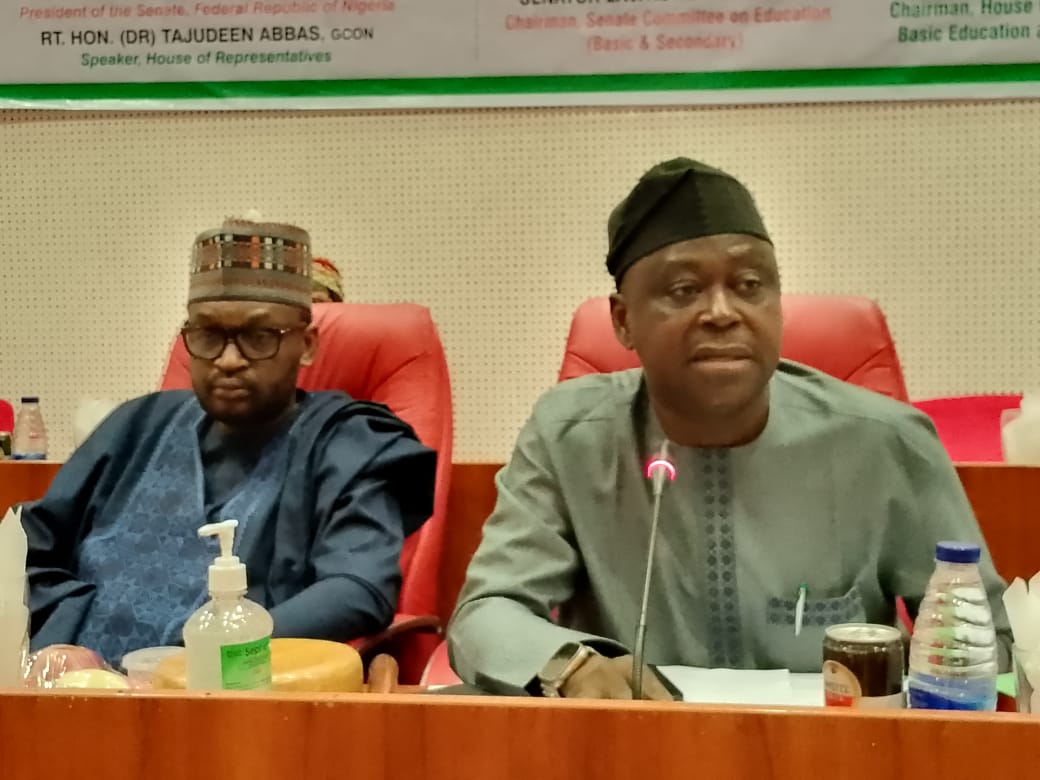
The demands were presented on Thursday during a joint stakeholders’ public hearing on the National Senior Secondary Education Commission (Amendment) Bill, 2026, held at the National Assembly in Abuja.
Stakeholders called for stronger institutional structures, improved representation of teachers and school administrators in education policymaking, adequate funding and effective monitoring mechanisms to address persistent challenges confronting secondary education across the country.
ASUSS, in its presentation, particularly called for the appointment of full-time chairmen for the state structures of the proposed National Senior Secondary Education Commission, arguing that dedicated leadership would strengthen administration, policy implementation and monitoring of educational programmes.
The Union demanded representation on the governing structures of the commission at both national and state levels, insisting that teachers, as major stakeholders in the education system, should have a voice in decisions affecting their profession and the delivery of secondary education.
It further maintained that the involvement of teachers in the governance framework would promote accountability, improve policy formulation and ensure that decisions taken by the commission reflected the realities confronting schools and classroom practitioners.
The union highlighted some of the challenges affecting teaching and learning in Nigerian secondary schools, including inadequate classrooms, overcrowding, insufficient teaching and learning materials, poor infrastructure and other conditions undermining effective education delivery.
It urged the National Assembly to ensure that the proposed amendments went beyond administrative restructuring to address the fundamental problems affecting the quality of education and the welfare of teachers.
Similarly, ANCOPSS, representing principals and school administrators across the country, participated in the stakeholders’ engagement, drawing attention to the importance of incorporating the experiences and professional contributions of school heads into the proposed governance and regulatory framework.
The confederation’s involvement underscored the need for policies that take into consideration the operational realities of secondary schools, particularly the challenges associated with school administration, infrastructure, staffing and effective supervision.
Stakeholders’ presentations came against the background of growing concerns over inadequate funding, dilapidated school facilities, shortages of instructional materials and disparities in the quality of secondary education across different parts of the country.
The National Senior Secondary Education Commission Amendment Bill, 2026, seeks to strengthen the administration, coordination and funding of public senior secondary education nationwide.
Among its major proposals are the establishment of Senior Secondary Education Boards in the 36 states and the Federal Capital Territory, as well as expanded federal intervention to cover public senior secondary schools, Federal Unity Colleges and secondary schools operated by the Armed Forces.
The proposed legislation also seeks to improve the management of intervention funds, strengthen institutional oversight and establish clearer administrative responsibilities for the commission and its state-level structures.
Both the Senate and House of Representatives had earlier passed the bill for second reading before referring it to their respective committees for further legislative consideration and stakeholder engagement.
