
BY: CHARLES CHIJIOKE
The Senate Committee on Public Accounts has issued what it described as a final directive compelling the Governor of the Central Bank of Nigeria (CBN), the management of the North East Development Commission (NEDC), and the Nigerian Upstream Petroleum Regulatory Commission (NUPRC) to appear before it on Thursday, August 6, 2026, following their failure to honour invitations to defend outstanding audit queries raised by the Auditor-General of the Federation.
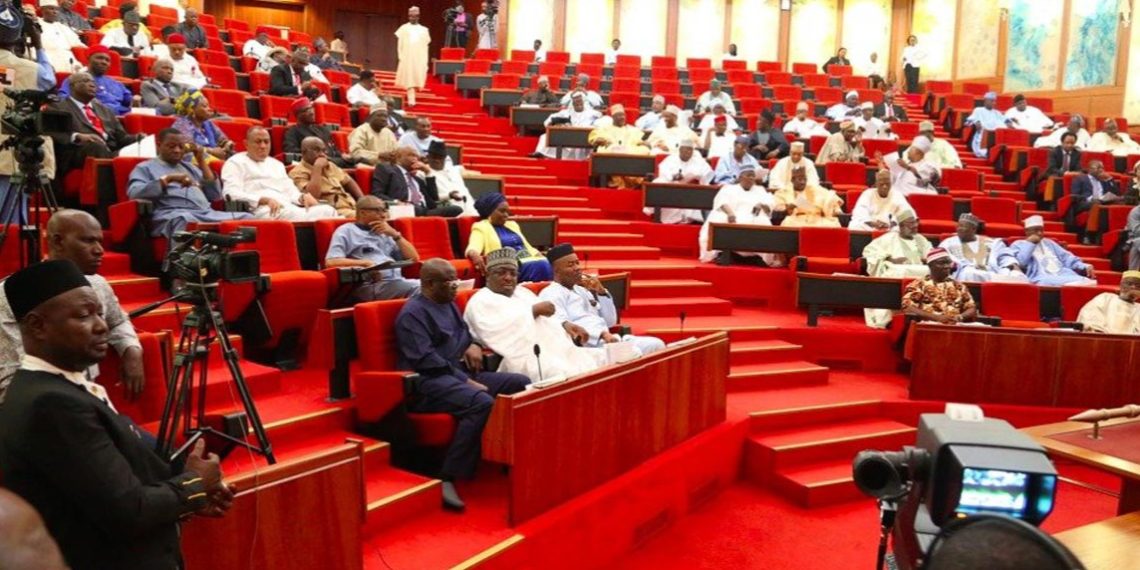
The committee, chaired by Senator Ibrahim Dankwambo, Monday expressed strong displeasure over the agencies’ absence, describing the development as a direct challenge to the constitutional oversight powers of the National Assembly. Lawmakers warned that any further refusal to appear could trigger constitutional and legislative sanctions against the affected institutions and their chief executives.
Afrilensnews reports that Senator Dankwambo revealed that formal invitation letters were acknowledged by the affected agencies on July 9, 2026, while notices of the hearing were equally published in three national newspapers—Daily Trust, ThisDay, and Vanguard—on July 24. Despite receiving the invitations and public notices, none of the agencies attended the hearing or sent any explanation for their absence.
“We slated this hearing to reduce the volume of work before the National Assembly and to strengthen our oversight responsibilities. Invitations were sent, acknowledged, and published in national newspapers, yet none of the invited agencies has appeared,” Senator Dankwambo said.
The chairman maintained that the Senate would not tolerate conduct capable of weakening the legislature’s constitutional mandate, stressing that public institutions are legally obligated to respond to audit observations and legislative summons.
Several members of the committee condemned the absence of the agencies, describing it as an affront to the Senate, a violation of accountability principles, and a dangerous precedent capable of eroding public confidence in democratic institutions.
Senator Babangida Hussaini, representing Jigawa North West Senatorial District, cited relevant provisions of the 1999 Constitution (as amended) and the Senate Standing Orders, insisting that the Public Accounts Committee derives its investigative powers directly from the Constitution. He argued that all government agencies are duty-bound to account for public funds and respond promptly to audit queries issued by the Auditor-General of the Federation.
Also speaking, Senator Patrick Ndubueze, representing Imo North Senatorial District, lamented that lawmakers suspended their legislative recess and constituency engagements to attend the hearing, only to discover that the invited agencies neither appeared nor communicated any reason for staying away.
According to lawmakers, repeated disregard for invitations from the National Assembly undermines legislative oversight, weakens transparency in public finance management, and creates the impression that government institutions can ignore constitutional authorities without consequences.
Following deliberations, the committee unanimously adopted a motion directing the CBN, NEDC and NUPRC to appear without fail on Thursday, August 6, 2026, for the continuation of proceedings on the unresolved audit issues.
Senator Ndubueze argued that the agencies had exhausted every benefit of doubt and should not be granted another opportunity should they fail to honour the latest summons. He urged the committee to invoke stronger constitutional measures against any public official who refuses to appear before the Senate without lawful justification.
Senator Dankwambo reiterated that the National Assembly would vigorously defend its constitutional oversight responsibilities, warning that persistent disobedience of legislative invitations could attract far-reaching consequences, including stricter enforcement measures permitted under the Constitution.
Political observers note that any sanctions imposed could further heighten scrutiny of the affected agencies and reinforce the Senate’s determination to enforce accountability in the management of public resources.
