

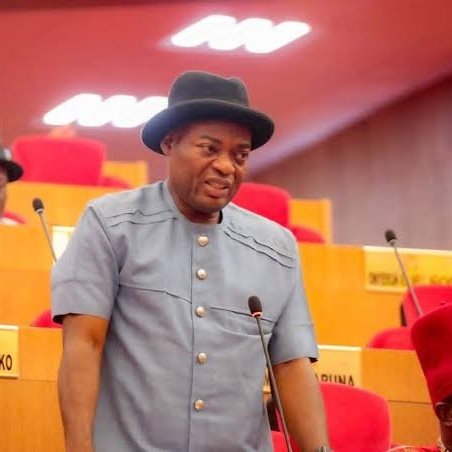
“My dear younger brother, Distinguished Senator Tony Nwoye, congratulations on your emergence as the Senate Minority Whip.
This elevation provides a greater platform for you to continue your service to humanity, particularly the poor and suffering Nigerians who look toward principled leadership for hope.
Remain steadfast to the Unity of our dear country, the well-being of the people, and the progress of our nation towards a new Nigeria that is POssible.”
The message, shared by Peter Obi, comes amid a significant political shake-up triggered by the defection of Osita Ngwu from Enugu State, who left the Peoples Democratic Party (PDP) for the All Progressives Congress (APC) on Wednesday—an exit that created the opening for Nwoye’s emergence as Senate Minority Whip.
Beyond the congratulatory tone, the development points to deeper shifts in the South-East’s political landscape. Long regarded as a PDP stronghold, the region is increasingly witnessing cracks as high-profile defections signal dissatisfaction within party ranks. Ngwu’s move not only dents the PDP’s strength in the Senate but also reinforces concerns about its internal stability ahead of future electoral cycles.
For the PDP, the implications are immediate and troubling. Losing a sitting senator in a core region weakens its negotiating power at the national level and raises questions about its ability to maintain loyalty among its political base. If the trend continues, the party risks ceding further ground in the South-East, a zone critical to its historical electoral success
.
For the APC, however, the defection represents a strategic gain. It strengthens the party’s presence in a region where it has struggled for dominance, while Nwoye’s elevation provides an opportunity to project influence and consolidate support through visible leadership roles in the National Assembly.
For the South-East, the situation presents a complex reality. On one hand, having figures like Nwoye in key Senate positions could enhance the region’s voice in national affairs. On the other, a fragmented political alignment may weaken its collective bargaining power, especially if there is no unified front to advance regional interests.
Obi’s statement, while celebratory, subtly underscores the broader expectation of leadership anchored on service, unity, and national progress—values that many observers believe will be tested as political realignments continue to reshape Nigeria’s power dynamics.
