

By CHARLES CHIJIOKE
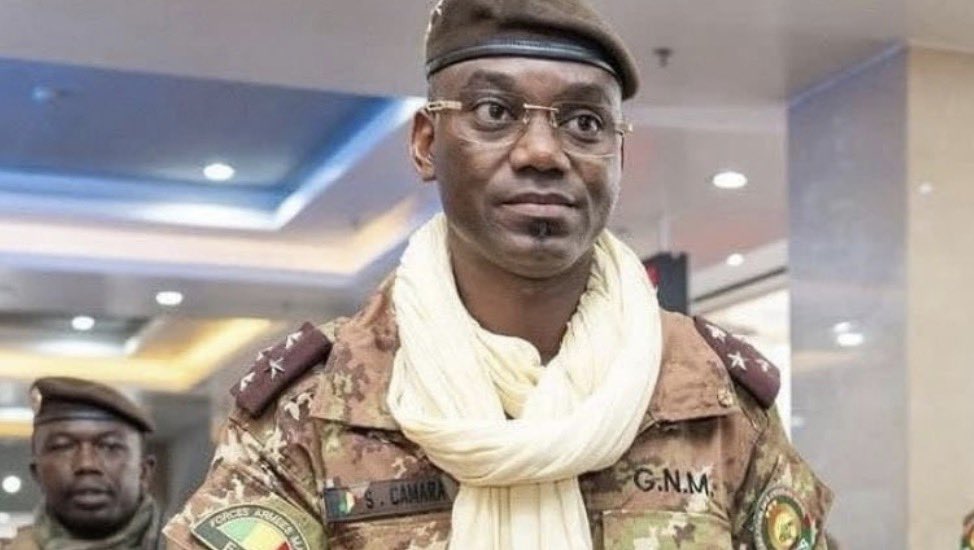
Sadio Camara, Mali’s defence minister, has been killed after a vehicle-borne explosive detonated outside his residence in Kati, a key military stronghold near Bamako, in what authorities describe as part of a coordinated wave of attacks on military targets across Mali.
The attack reportedly occurred on Saturday when jihadist fighters linked to al-Qaeda and Tuareg rebel factions launched simultaneous assaults nationwide, including on Kati — a heavily fortified garrison town that hosts Assimi Goïta and other leaders of the ruling military junta.
Security sources say the explosion destroyed Camara’s residence, killing him alongside at least three family members. The assassination marks a major blow to Mali’s military leadership, where Camara was seen as a central figure following the 2020 and 2021 coups that brought the junta to power.
The violence appears to be part of a broader escalation in the country’s long-running insurgency. Fighting resumed early Sunday in Kidal, a volatile northern region, underscoring the widening scope of the conflict.
Reacting to the developments, Mohamed Almaouloud Ramadane, spokesperson for the Front for the Liberation of Azawad (FLA), said an agreement had been reached between Azawad forces and elements of the Russian Africa Corps to ensure safe withdrawal from ongoing clashes.
“Early this morning an agreement was reached between the Azadian forces and the Russian elements of the Africa corps to guarantee their safe withdrawal from fighting,” he said in a Facebook post.
He added that “elements of the Malian army retrenched in the former MINUSMA camps are currently under sustained strikes aimed at forcing them to leave their bunkers.”
The killing of Camara is likely to intensify instability in Mali, raising concerns over further attacks on government and military installations. Analysts warn the development could weaken the junta’s grip on power and embolden insurgent groups operating across the Sahel region.
The incident also highlights the growing complexity of the conflict, involving jihadist networks, separatist movements, and foreign military actors, with potential implications for regional security in West Africa.
