
BY: CHARLES CHIJIOKE
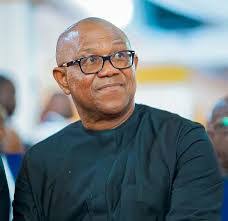
Former Anambra State Governor and 2023 presidential candidate, Peter Obi, has declared that Nigeria’s deepening education crisis stems not from inadequate funding but from systemic failures in leadership, accountability, and governance.
Reacting to recent remarks by the Minister of Education, Obi noted with alarm that despite the North-West and North-East regions absorbing nearly 80 percent of all educational donor funding over the past decade, those same zones continue to record the nation’s lowest literacy and numeracy rates.
“Financial resources alone do not guarantee proper education,” Obi argued. “What truly makes a difference in education is the responsible and transparent management of these funds, aimed at achieving tangible results and a genuine commitment to developing human capital.” He warned against the tendency to applaud government budgets, donor contributions, and intervention programmes while millions of Nigerian children remain unable to read or write—skills he described as essential for thriving in today’s world.
The former governor characterised the situation as a tragedy not merely of statistics but of squandered potential. “The real tragedy lies not just in the numbers, but in the lost potential of countless children whose futures are being compromised by systemic inefficiency and corruption,” he said. Obi stressed that Nigeria’s most valuable asset is neither its oil nor its political propaganda, but the human capital of its youth. He cautioned that a nation which neglects education effectively condemns itself to recurring cycles of poverty, insecurity, unemployment, and instability.
Drawing lessons from rapidly developing countries, Obi pointed to China, India, Indonesia, Vietnam, and Bangladesh as examples where substantial investment in education—coupled with accountable implementation—has fuelled progress and growth. He called on Nigeria to move beyond rhetoric to measurable outcomes: constructing schools, training teachers, modernising curricula, strengthening monitoring systems, and ensuring every kobo spent on education directly benefits children rather than being diverted by political intermediaries and bureaucratic networks.
“Every kobo spent on education must lead to clear improvements in literacy rates, school enrollment, teacher performance, and overall learning outcomes. Anything less is unacceptable,” he insisted.
The immediate consequence of continued inaction, Obi warned, would be a future marked by deepening poverty and rising insecurity, as millions of uneducated youths become vulnerable to extremism and criminality. Conversely, he argued that a decisive shift toward accountable governance in education could unlock a brighter future for Africa’s most populous nation.
“A nation’s progress is closely linked to the quality of its education system. A brighter future for Nigeria is achievable!” he concluded. His comments have reignited a national dialogue on how public funds and donor contributions are utilised, with education stakeholders urging parliamentary oversight and civil society tracking of intervention programmes in the northern regions.
