
By Charles Chijioke
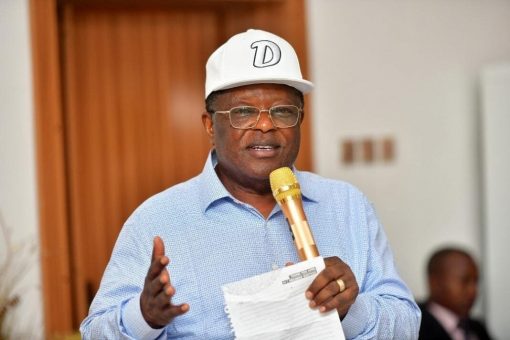
ABUJA — Minister of Works, David Umahi, has issued a 72-hour ultimatum to construction firm GELD Construction Limited to fully mobilise to its section of the Abuja-Lokoja Highway, amid mounting concerns over delays, poor supervision, and funding challenges affecting the strategic federal road project.
Afrilensnews reports that the minister also ordered a comprehensive performance and financial review of contractors handling the highway while warning that officials of the Federal Ministry of Works found culpable of poor project monitoring could face sanctions, including removal from their positions.
Umahi issued the directive during a joint inspection of the Abuja-Lokoja Highway alongside the chairmen of the Senate and House of Representatives Committees on Works.
Expressing dissatisfaction with the pace of work on GELD Construction Limited’s section of the project, the minister noted that only about 8.2 kilometres of concrete pavement had been completed on a 28-kilometre stretch despite the contractor spending several years on site.
According to him, the original contract covered 49.28 kilometres but was later reduced to 28 kilometres due to funding constraints.
“GELD is not doing well at all on this project. The contractor has been on this job for years and the progress recorded is not commensurate with the time spent on site,” Umahi said.
The minister directed ministry officials to identify the most deteriorated sections of the highway for immediate intervention using available advance payment funds, stressing that motorists should not continue to suffer because of project delays.
He also condemned recurring traffic disruptions caused by construction activities and insisted that no section of a federal highway should remain closed for more than 14 days without adequate alternative routes.
“I feel very sad whenever I see this road completely blocked. Contractors have no right to keep road users suffering. The ministry’s officials have no right to keep quiet while that happens,” he stated.
Umahi further criticised weak project monitoring by some ministry officials, noting that certain engineers supervising multiple projects were unable to provide lawmakers with basic details about contracts under their supervision.
He warned contractors who had received government advance payments to deploy the funds to ongoing projects or risk sanctions, including possible investigation by anti-corruption agencies.
The minister acknowledged challenges arising from delayed payments and appealed to the Nigerian National Petroleum Company Limited to accelerate the release of funds for road projects being financed under its Tax Credit Scheme arrangement with the Federal Government.
He disclosed that President Bola Ahmed Tinubu had approved measures to facilitate payments but expressed concern over delays in implementation.
“The road users are the ones suffering. If urgent action is not taken, the condition of some sections of this corridor could deteriorate significantly within a few months,” he warned.
Umahi reiterated that contractors unwilling or unable to continue work despite receiving government funds could be replaced, maintaining that the Tinubu administration remains committed to completing critical road infrastructure projects nationwide.
Chairman of the House Committee on Works, Akin Alabi, supported the minister’s position, stressing that effective delivery of road infrastructure depends on commitment from contractors, ministry officials, and funding agencies.
“The President cannot be everywhere, and neither can the minister. That is why there are engineers, controllers and supervisors on site. What we have seen here suggests that reports reaching the minister do not fully reflect realities on the ground,” Alabi said.
He urged contractors to sustain work despite cash flow challenges and called on NNPC Limited, the Ministry of Finance and other relevant agencies to fast-track payments for completed projects.
Similarly, Chairman of the Senate Committee on Works, Onyekachi Nwaebonyi, called on ministry officials to carry out their responsibilities diligently, arguing that public criticism often falls on elected officials even when implementation failures originate elsewhere.
“If approvals have been granted, payments should be made. Nigerians want to see results and are no longer interested in excuses,” Nwaebonyi said.
He added that the National Assembly committees would return for a follow-up inspection and warned that lawmakers would make their findings public if substantial improvements are not recorded.
The development highlights growing pressure on contractors and supervising agencies to deliver critical infrastructure projects on schedule.
Failure to address the identified lapses could worsen travel conditions on one of Nigeria’s busiest transport corridors, increase maintenance costs, and undermine public confidence in ongoing infrastructure reforms.
