

BY AFRILENS NEWS
Peter Obi was reportedly not impressed with the outcome of the opposition leaders’ summit in Ibadan, amid concerns that the much-publicised “Ibadan Declaration” failed to address the contentious issue of zoning ahead of the 2027 presidential election.
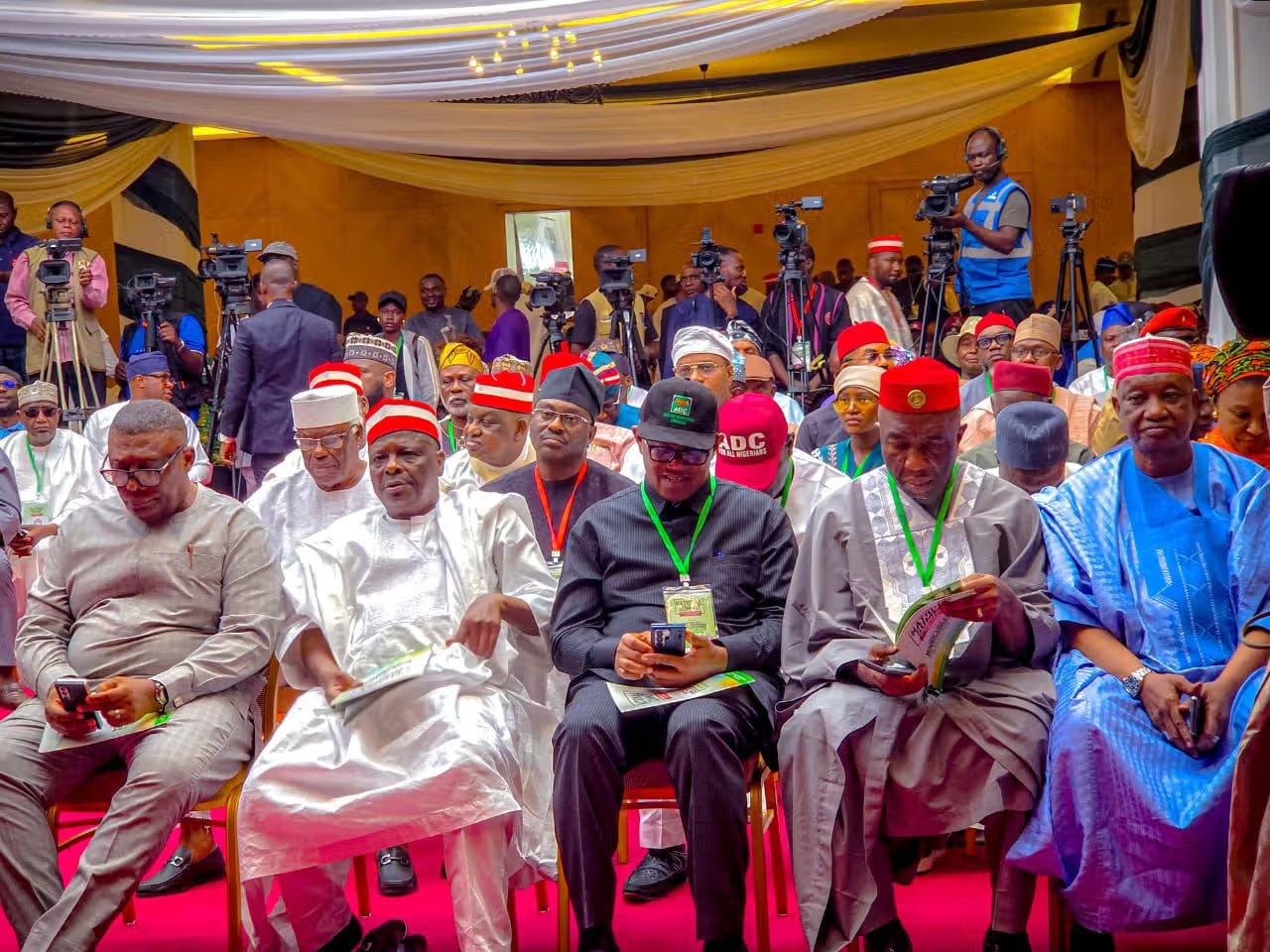
According to TheCable, the summit—chaired by former President Olusegun Obasanjo and hosted by Oyo State governor Seyi Makinde—brought together major opposition figures including Atiku Abubakar, Rabiu Kwankwaso, and Rotimi Amaechi, with a resolution to field a single presidential candidate against President Bola Tinubu in 2027.
While the move initially signaled unity, insiders told the publication that Obi’s dissatisfaction stemmed from the summit’s failure to clarify where that candidate would emerge from, particularly regarding the long-standing zoning principle that rotates power between Nigeria’s regions.
“The summit ended politically as it was designed to. They did not achieve what they wanted. It ended without addressing the basic issue,” an insider was quoted as saying.
Sources close to Obi said the absence of a clear zoning position undermines trust and raises unresolved questions about whether northern contenders like Atiku would step aside for a southern candidate, or if Obi himself would accept a secondary role in any coalition arrangement.
Obi has consistently maintained that zoning is critical to equity and stability in Nigeria’s political structure. In previous remarks, he warned that failure to resolve such issues weakens opposition alliances and fuels internal distrust.
Despite the high-profile nature of the Ibadan meeting, Obi has remained publicly silent—an unusual move observers interpret as a sign of disapproval. Instead of commenting on the declaration, he posted images of himself playing tennis in Ibadan shortly after the summit, further fueling speculation about his stance.
“If they had gone further to say that the opposition would respect zoning, it would have been a different outcome. They only made a political statement for one candidate. The summit is as good as not achieving anything,” another source said.
The report added that Obi is now exploring alternative political strategies while awaiting a Supreme Court ruling on the leadership of the African Democratic Congress (ADC), and is maintaining communication with Kwankwaso as part of broader consultations.
The development highlights deep-seated divisions within Nigeria’s opposition bloc, suggesting that the goal of presenting a unified front in 2027 may remain elusive without consensus on zoning, ambition, and power-sharing arrangements.
Analysts warn that failure to resolve these internal disagreements could weaken the opposition’s chances against the ruling All Progressives Congress, while prolonging uncertainty over coalition-building efforts in the run-up to the election.
