

BY CHIJIOKE CHARLES
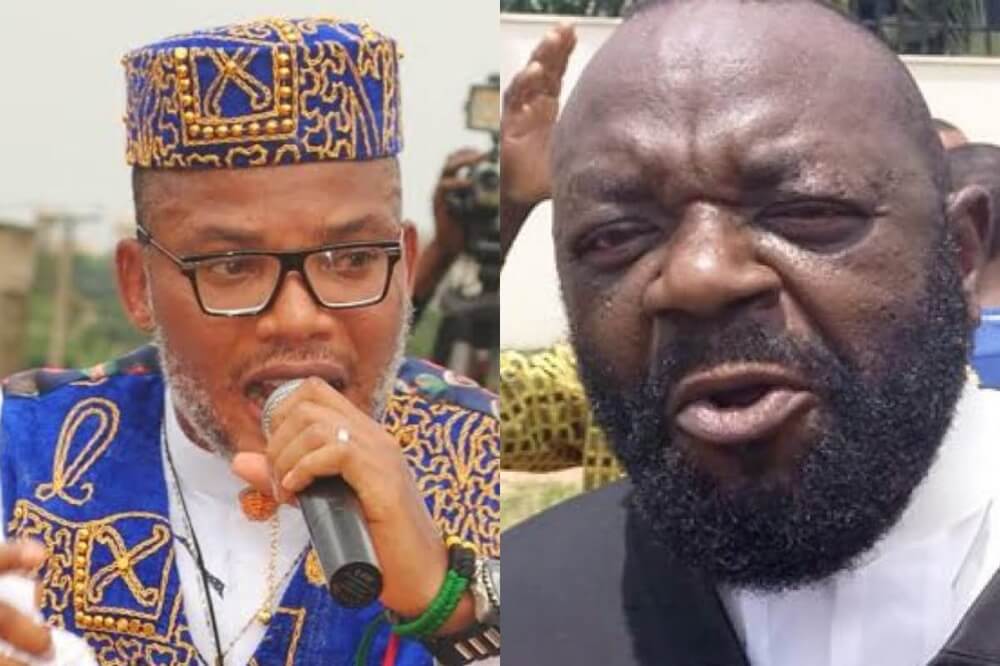
Aloy Ejimakor, counsel to detained Nnamdi Kanu, has publicly urged Southeast governors to align with Alex Otti in seeking what he described as a “dignified political solution” to end Kanu’s continued incarceration.
In a tweet posted on Tuesday, Ejimakor said he had repeatedly made the appeal privately but was compelled to go public due to the urgency and what he framed as an unfulfilled commitment by regional leaders.
“Dear Southeast Governors: Like I had consistently done in private, let me go on record to publicly urge Your Excellencies to join hands with Governor Alex Otti in his sincere & muscular efforts in seeking a dignified political solution that will end MAZI NNAMDI KANU’s incarceration, sooner than later. Remember the promise Your Excellencies publicly made in July 2024. It’s said that a promise is a debt. This very debt is sacrosanct and long overdue,” Ejimakor wrote.
Kanu, leader of the Indigenous People of Biafra (IPOB), has been in prolonged detention following a series of legal and security developments that began with his initial arrest in 2015 on charges including treasonable felony. After being granted bail in 2017, he fled Nigeria following a military operation in his hometown. He was later re-arrested in 2021 under controversial circumstances and returned to Nigeria, where he has since faced ongoing prosecution and detention. His case has remained a focal point of political tension and legal contestation, particularly in the Southeast.
Ejimakor’s latest statement references a reported consensus among Southeast governors in July 2024 to pursue a political pathway toward resolving Kanu’s case, a commitment critics say has yet to translate into concrete outcomes. Governor Otti has recently been associated with renewed advocacy for dialogue and reconciliation, positioning him as a central figure in current efforts.
The renewed call is expected to heighten pressure on regional leaders to act collectively, especially amid persistent security challenges and separatist agitations in the Southeast. A coordinated push for a political solution could potentially influence federal authorities to consider negotiations or alternative resolutions outside the courtroom.
