

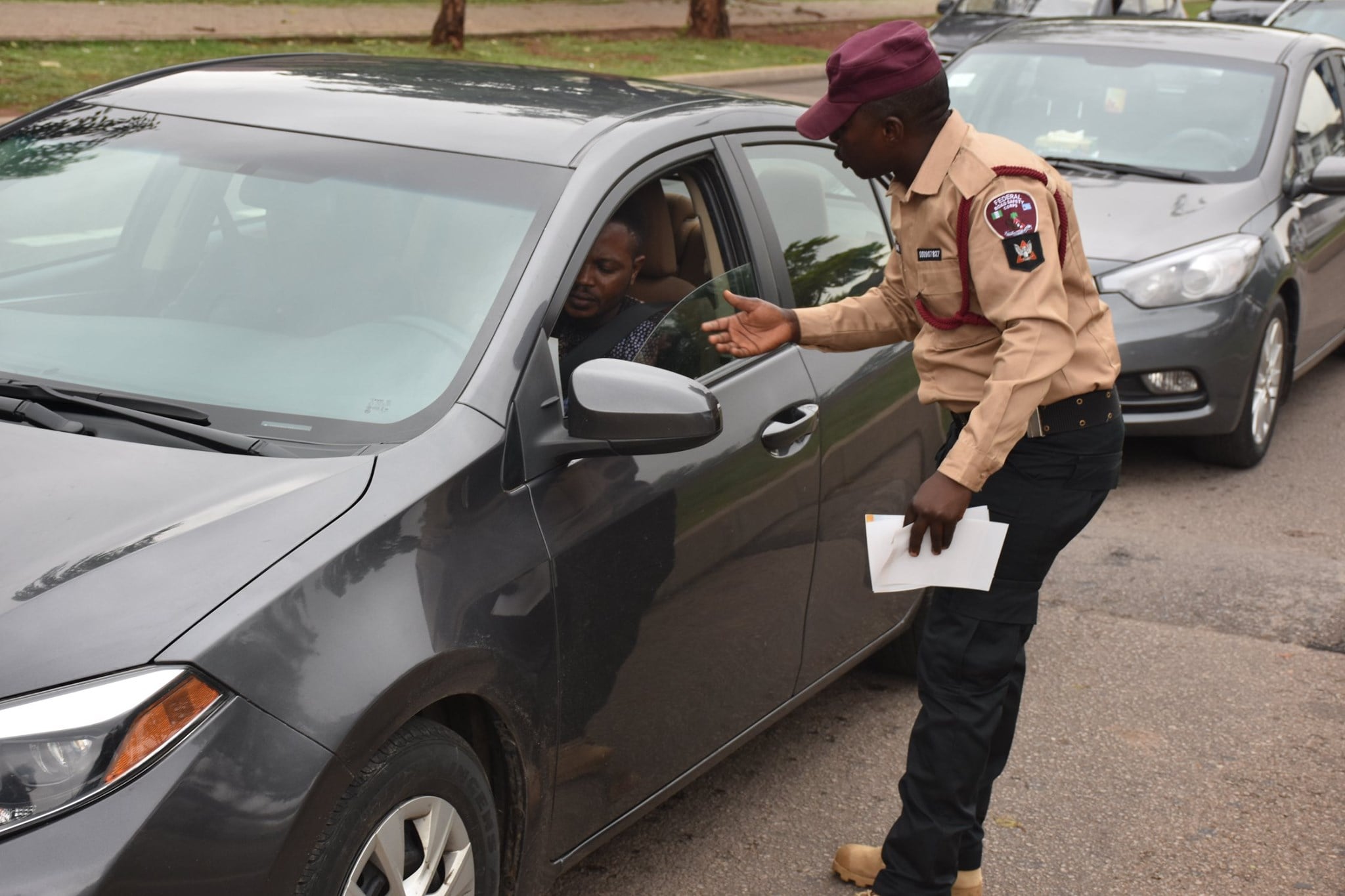
A Federal High Court in Abuja has ruled that the Nigeria Police Force and the Federal Road Safety Corps cannot impose fines on motorists over third-party motor insurance without first obtaining a court order.
Justice Hauwa Yilwa delivered the judgment in a suit filed by activist-lawyer Deji Adeyanju against the inspector-general of police, the attorney-general of the federation, and the FRSC.
The court drew a clear line between enforcement and punishment, holding that while authorities can check compliance with insurance laws, they lack the power to penalise offenders directly.
Marvin Omorogbe, counsel to the applicant, said the ruling firmly limits the agencies’ powers. “The police and the road safety may enforce compliance but outrightly lack the powers to impose fines on third parties or vehicle owners,” he said. “The court went further to restrain the IGP, the police force and all their officers, including the FRSC, from imposing fines on motor vehicle users or Nigerian citizens.”
The suit, marked FHC/ABJ/CS/291/2025, was filed to clarify whether law enforcement agencies can enforce third-party insurance laws and impose sanctions without judicial backing.
Reacting after the judgment, Adeyanju said the verdict addressed the core concern behind the case. “The sole reason why we came to court is because we wanted the court to make a positive declaration that the police and the road safety do not have the right to impose fines on any Nigerian over motor vehicle insurance. And we have succeeded,” he said.
He added that the decision would help curb what he described as arbitrary fines imposed on motorists across the country.
However, Victor Okoye, counsel to the defendants, described the judgment as only partly favourable and signalled plans to challenge it at the appellate court.
“We envisage that we will likely challenge the proceedings at the court of appeal to determine if the court ought to have determined a case where the originating summons is incompetent,” he said.
Okoye also argued that the suit was improperly filed, maintaining that the inspector-general of police was sued instead of the Nigeria Police Force as a legal entity.
Despite the objections, the court proceeded with its ruling, while affirming that both agencies still retain the authority to stop motorists and verify compliance with third-party insurance requirements but not to punish them without due process.
