
…Alleges Massive Transparency Crisis Over Missing Budger Expenditure
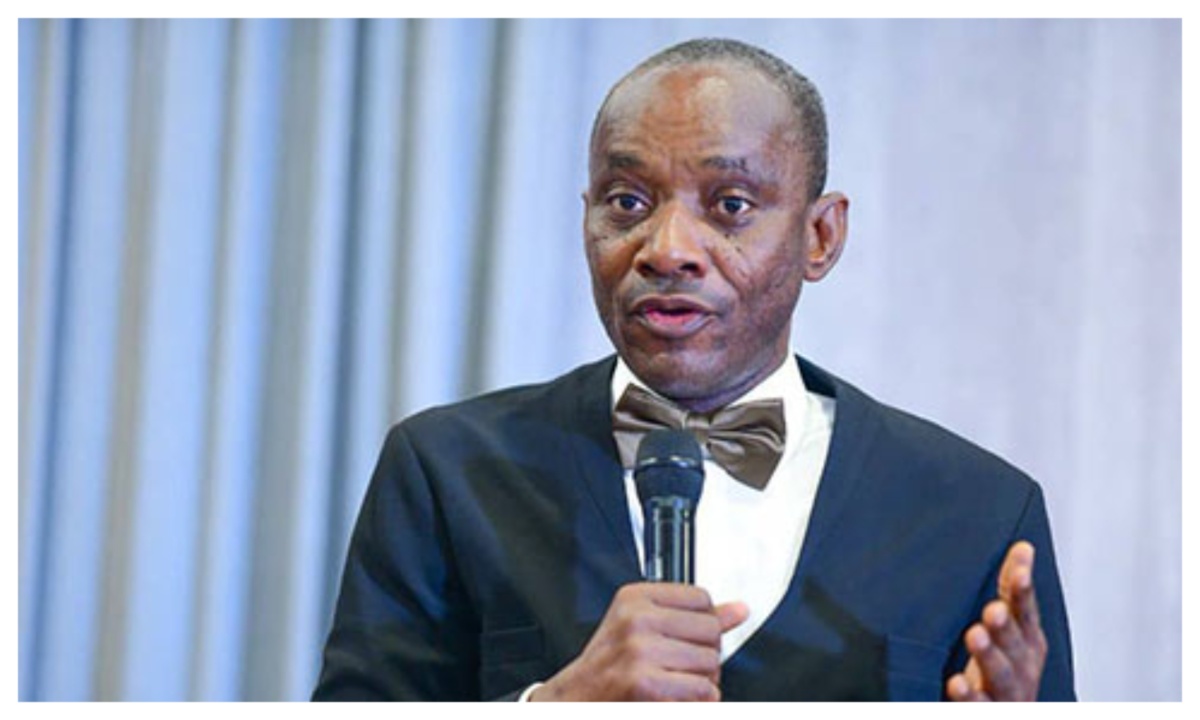
ABUJA — A fresh controversy has erupted over Nigeria’s public finances after Director of the Abuja School of Social and Political Thoughts, Sam Amadi, declared that the Federal Government operates an “uncontrolled, unmanaged, not transparent and unaccountable” public expenditure system.
Amadi made the remarks during an interview on Arise Television while reacting to the recent revelation by the International Monetary Fund (IMF) that Nigeria failed to capture public expenditure equivalent to about 2 percent of its Gross Domestic Product (GDP) in recent budget documents.
His comments come amid growing political and public scrutiny over the IMF’s findings. While the Federal Government has firmly rejected suggestions that trillions of naira were spent outside the 2025 budget, insisting that all expenditures complied with constitutional and legal provisions, Amadi argued that the issue extends beyond whether money was legally spent.
According to him, the more fundamental concern is whether public spending follows a transparent and accountable process from appropriation to execution and reporting.
Amadi cited what he described as an early warning sign under the current administration, recalling that the Minister of the Federal Capital Territory reportedly sought exemption from the normal public procurement process shortly after the government assumed office.
He argued that such exemptions weaken institutional safeguards designed to ensure value for money and public accountability.
He maintained that fiscal accountability is built on a chain of procedures: projects must first be budgeted, approved by the National Assembly, subjected to procurement rules, implemented transparently, monitored, and properly reported.
According to him, once any of these stages is bypassed or weakened, confidence in public expenditure is eroded.
The IMF’s reference to expenditure amounting to about 2 percent of GDP does not necessarily imply that the money was stolen or illegally diverted. Rather, it suggests that government spending of that magnitude was reportedly not fully reflected in the fiscal reports or budget documentation reviewed by the Fund.
Economists note that such omissions can arise from off-budget spending, spending through special intervention funds, government-owned enterprises, emergency financing arrangements, or delayed reporting by government agencies.
The Federal Government, however, has dismissed the interpretation that funds went missing. Officials insist that every expenditure was made within Nigeria’s constitutional and legal framework and that there was no unauthorized spending outside approved government processes.
Despite that defence, Amadi argued that legality alone is insufficient if transparency and public accountability cannot be independently verified. He warned that without a credible expenditure tracking system, Nigerians cannot be assured of the prudence, integrity, or efficiency of government spending.
His intervention adds another layer to the debate ignited by the IMF report, with opposition figures and civil society groups demanding fuller disclosure of public finance records.
The controversy is expected to intensify calls for greater transparency in budget implementation, procurement, and fiscal reporting as pressure mounts on the government to reassure citizens and development partners about the integrity of Nigeria’s public financial management system.
