
By Charles Chijioke
The Trade Union Congress (TUC) has proposed a “production subsidy” for Dangote Refinery and other modular refineries as part of measures to reduce the soaring price of Premium Motor Spirit (PMS), popularly known as petrol, across Nigeria.
TUC President Festus Osifo made the proposal during an appearance on Politics Today, a programme on Channels Television�, amid worsening concerns over rising fuel prices triggered by global crude oil tensions linked to the US-Israel-Iran conflict.
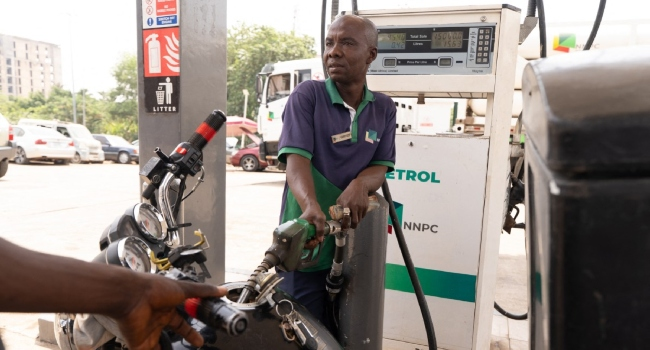
Petrol prices have surged from about ₦800 per litre to as high as ₦1,300 in several parts of the country in recent weeks, putting fresh pressure on transportation costs, food prices, and household spending.
Osifo argued that while the Federal Government has ruled out the return of fuel subsidy, authorities should explore alternative interventions to ease the burden on Nigerians.
“So for us as a country, we are making a lot of money. In excess of what we budgeted,” he said.
“All right, so today we make at least $35 or so dollars per barrel beyond what we budgeted.
“So, what we proposed, knowing and understanding that they wouldn’t want to bring a consumption subsidy, we were advocating for a production subsidy.”
According to him, the government can channel part of the windfall earnings from crude oil sales into subsidising crude supply to local refineries, especially Dangote Refinery and modular refining plants, to enable them to produce petrol at lower costs.
“Why don’t you take half of it, for example, and use it to subsidise the crude that you are giving to Dangote Refinery and the modular refineries so that they will be able to produce cheaper PMS?” Osifo asked.
The proposal comes as the Federal Government maintains its hardline stance against reinstating fuel subsidy following its removal by President Bola Ahmed Tinubu in May 2023.
Chairman of the Presidential Fiscal Policy and Tax Reforms Committee, Taiwo Oyedele, recently reiterated the government’s position, insisting that subsidy payments distort the economy and discourage market efficiency.
“We will not bring back fuel subsidy because it creates distortions for the economy, and we won’t introduce price control because we believe in the market,” Oyedele said.
Analysts say the TUC’s proposal could reopen national debate over how Nigeria should manage fuel pricing and crude oil revenues without returning to the controversial subsidy regime that previously consumed trillions of naira annually.
If adopted, the policy may reduce pump prices in the short term and provide relief to consumers and businesses battling inflation. However, critics may question whether the proposed production subsidy would eventually become another indirect subsidy burden on public finances.
The conversation also comes at a critical time for Nigeria’s downstream oil sector, with expectations that local refining capacity from Dangote Refinery and modular plants could eventually reduce dependence on imported fuel and stabilise domestic supply.
