
BY CHIJIOKE CHARLES
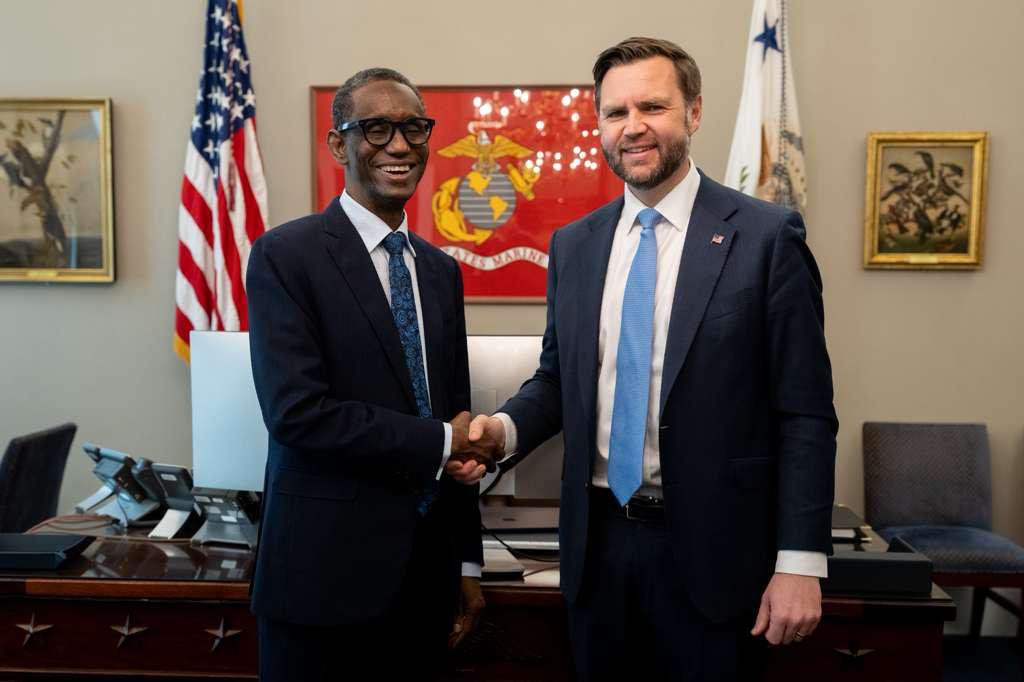
Nigeria and the United States have moved to reinforce their strategic security partnership following a high-level visit to Washington by Nigeria’s National Security Adviser, Mallam Nuhu Ribadu, who held talks with senior American officials including U.S. Vice President J.D. Vance and Secretary of State Marco Rubio.
According to a State House statement issued by presidential spokesperson Bayo Onanuga, the three-day engagement from May 4 to May 6 focused on strengthening cooperation in counterterrorism, intelligence sharing, regional stability, defence collaboration, and economic resilience, amid worsening insecurity across West Africa and the Sahel.
Ribadu conveyed President Bola Ahmed Tinubu’s commitment to sustaining Nigeria’s “longstanding strategic partnership with the United States,” while both sides reviewed ongoing joint initiatives under the Nigeria–U.S. Joint Working Group framework. The meetings also included discussions with senior U.S. officials such as Undersecretary for Political Affairs Allison Hooker and Assistant Secretary Daniel Zimmerim at the U.S. Department of State.
The statement noted that Ribadu stressed the urgency of coordinated action against terrorism, violent extremism, cyber threats, and transnational organised crime, describing Nigeria as a “frontline state” in regional counterterrorism operations, particularly in the Lake Chad Basin. He also outlined Nigeria’s
“whole-of-government approach” combining military operations with non-kinetic strategies such as deradicalisation, community engagement, and economic reforms aimed at addressing root causes of insecurity.
U.S. officials, according to the statement, commended Nigeria’s regional security role and reaffirmed Washington’s readiness to continue supporting defence capacity building, intelligence cooperation, and humanitarian assistance.
The renewed engagement signals an attempt by both countries to recalibrate security cooperation at a time of shifting geopolitical tensions and expanding extremist networks across the Sahel. Analysts say the deepened collaboration could translate into increased intelligence-led operations, stronger border security coordination, and expanded military training support for Nigerian forces.
However, observers also note that the effectiveness of the partnership will depend on implementation under the Joint Working Group and Nigeria’s ability to translate external support into measurable improvements in domestic security conditions.
The talks ended with both sides expressing optimism about future cooperation and a shared commitment to democratic governance, regional stability, and sustained diplomatic engagement.
