
By Charles Chijioke
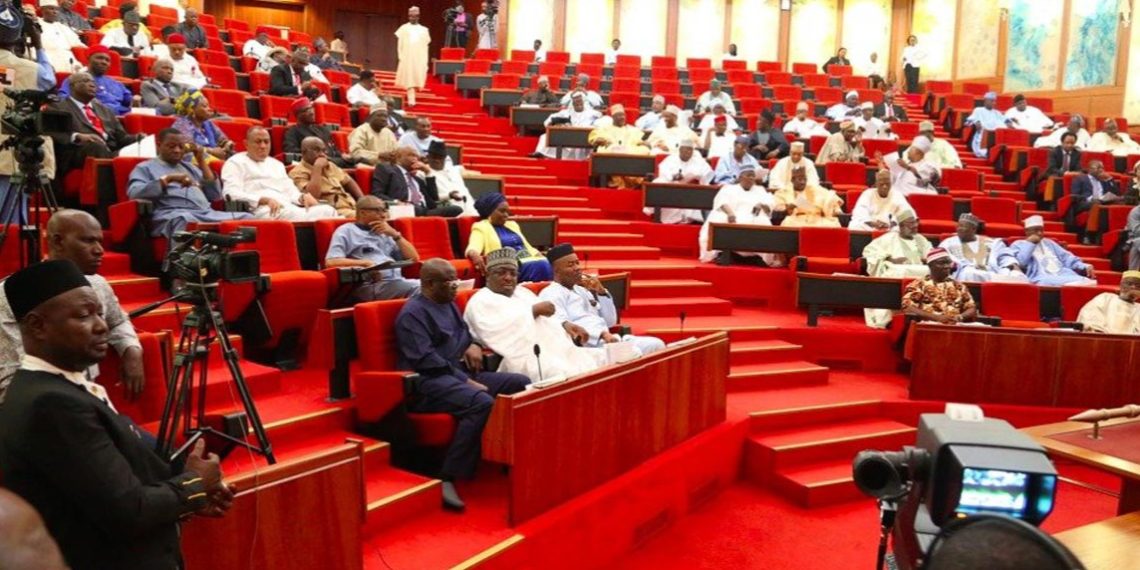
Nigeria’s Senate has reversed a controversial amendment to its standing rules that required senators-elect to take their oath of office before participating in the election of presiding officers of the upper chamber.
The decision, reached during plenary on Thursday, effectively restores the long-standing parliamentary tradition that allows senators-elect to vote for the Senate President and Deputy Senate President before formal swearing-in.
The motion for rescission and recommittal was sponsored by Senate Leader, Opeyemi Bamidele, barely 48 hours after the amendment sparked heated arguments within the red chamber.
The Senate said the now-reversed provision contained in Orders 2(2) and 3(1) of the amended standing rules risked creating “constitutional inconsistencies and unintended tensions” with Section 52 of the 1999 Constitution.
According to lawmakers, the reversal became necessary to align Senate procedures with constitutional provisions, parliamentary conventions and established legislative practice.
The controversial amendment had earlier altered the procedure for inaugurating a new Senate by making oath-taking compulsory before senators-elect could participate in leadership elections.
Under the rescinded Order 3(1), a senator-elect “shall not participate in any proceedings of the Senate, including voting for the election of the President and Deputy President of the Senate, unless and until he has taken the Oaths”.
With Thursday’s reversal, senators-elect in the incoming 11th Senate can now participate in leadership elections before taking the oath of office, returning the chamber to its previous practice.
The development comes amid growing political tension over succession battles expected ahead of the 2027 National Assembly inauguration.
During plenary, Senator Adams Oshiomhole welcomed the reversal but faulted the manner the earlier amendment was passed.
“This shows that when there are amendments, the next time, we should allow debate. That’s it,” Oshiomhole said after raising a point of order.
The former Edo State governor had earlier clashed openly with Senate President Godswill Akpabio over the amendment, insisting it contradicted agreements reached during a closed-door session.
Responding during Thursday’s proceedings, Bamidele accused Oshiomhole of creating “unnecessary drama” on the Senate floor.
“We are not going to allow this to continue,” the Senate Leader said.
Citing Order 52(6) of the Senate standing rules, Bamidele argued that lawmakers dissatisfied with previous decisions should file substantive motions instead of reopening debates during plenary.
“So, if His Excellency Distinguished Senator Adams Aliyu Oshiomhole, CON, had any problem with the decisions that were taken with respect to the amendment two days ago, what he was expected to do was to bring the substantive motion for the session to be debated on the floor of this parliament.
“We cannot allow this kind of drama to go on every time on the floor of this senate we must put a stop to it,” he added.
The Senate’s reversal follows widespread reactions trailing Tuesday’s broader amendment of its standing rules, which restricted eligibility for presiding and principal offices to lawmakers who have served at least two consecutive terms immediately before nomination.
That amendment effectively narrowed the field for the 2027 Senate presidency race, limiting eligibility largely to returning members of the current 10th Senate.
Political observers had interpreted the rule change as a move capable of shutting out prominent former senators and political heavyweights expected to seek a return to the chamber in 2027, including Hope Uzodimma, Ifeanyi Okowa and Ovie Omo-Agege.
Thursday’s decision may ease immediate constitutional concerns surrounding the inauguration process of the next Senate, but the broader controversy over eligibility restrictions for top leadership offices is expected to remain a major political issue ahead of the 2027 elections.
The latest development also highlights growing divisions within the Senate over internal rule changes, succession calculations and control of the National Assembly leadership structure.
