
By Charles Chijioke
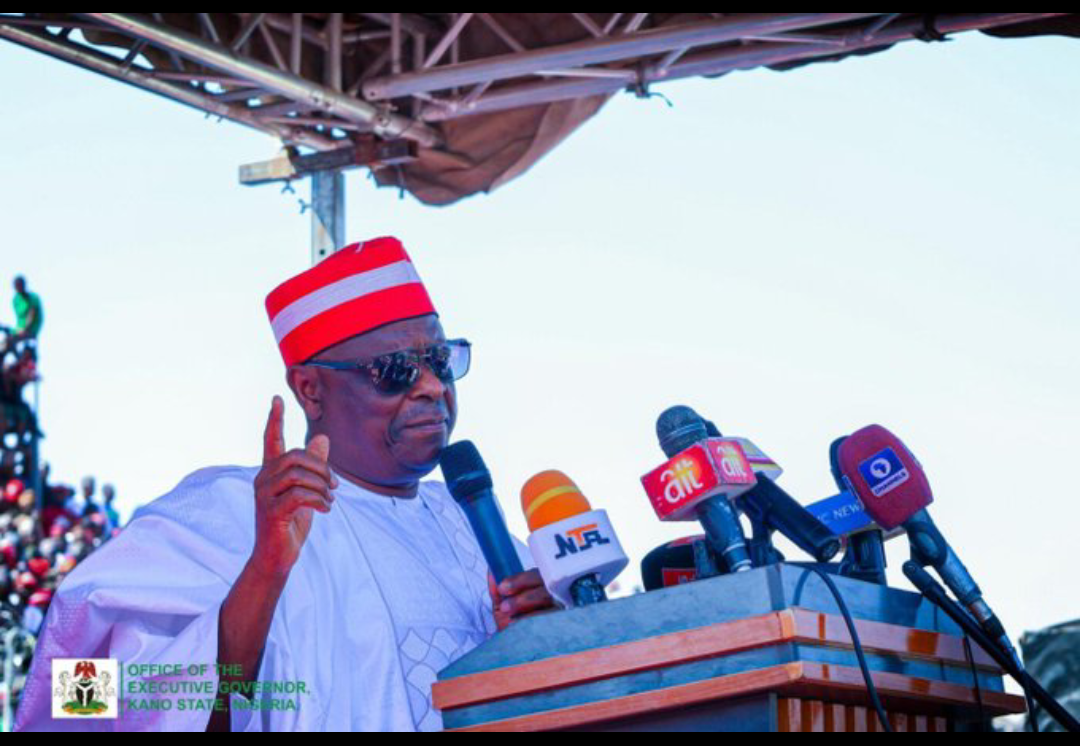
A prominent figure in the Nigeria Democratic Congress (NDC), Rabiu Musa Kwankwaso, has expressed confidence that he will emerge as the party’s vice-presidential candidate ahead of the 2027 general election, arguing that such a development could eventually position Kano State to produce Nigeria’s president.
Kwankwaso made the remarks during an interview on Premier Radio over the weekend, amid ongoing political realignments and coalition talks ahead of the next electoral cycle.
According to him, securing the vice-presidential ticket would represent a historic breakthrough for Kano, a state he said has played significant roles in Nigeria’s political development but has yet to occupy the office of vice president.
“By God’s grace, the next election will be unlike anything that has ever happened in our state and country, especially if I secure the ticket and my name is on the ballot,” Kwankwaso said.
“Since the First Republic, despite our struggles and political wisdom, Kano has never produced a vice president. This is both disappointing and deeply saddening, but by God’s grace, it will be corrected.
“Kano state will rightfully secure this position, which will open the door for our state to eventually produce the president of this country.”
The former governor also appealed to northern political stakeholders, particularly in the North-West, to carefully weigh future decisions, while suggesting there was increasing support for the party from southern Nigeria.
“People from the south who understand what is happening are already registering with our party. The north, especially the north-west, must be careful and ensure they do what is right so they do not make a decision they will deeply regret,” he added.
The comments come against the backdrop of recent political movements involving Kwankwaso and Peter Obi. Reports indicate both politicians recently aligned with the NDC as discussions over a broad opposition coalition continue ahead of the 2027 presidential race.
Political sources familiar with the arrangement suggest that Obi may emerge as the coalition’s presidential candidate, with Kwankwaso potentially serving as running mate on a joint ticket.
Though no official confirmation has been issued by the party leadership, such a pairing could reshape calculations within Nigeria’s opposition landscape.
Kwankwaso’s latest remarks are also likely to revive debates surrounding Nigeria’s informal power rotation principle, which has long influenced presidential succession discussions between the North and South. Many political observers maintain that power should remain in the South until 2031, after President Bola Ahmed Tinubu completes a possible second term.
If a southern candidate such as Obi secures victory in 2027 and Kwankwaso serves as vice president, analysts believe it could strengthen the former Kano governor’s positioning for a future presidential bid after 2031.
The development may also trigger fresh conversations within the northern political establishment over regional interests, succession planning and coalition politics as the race toward 2027 gradually intensifies.
