
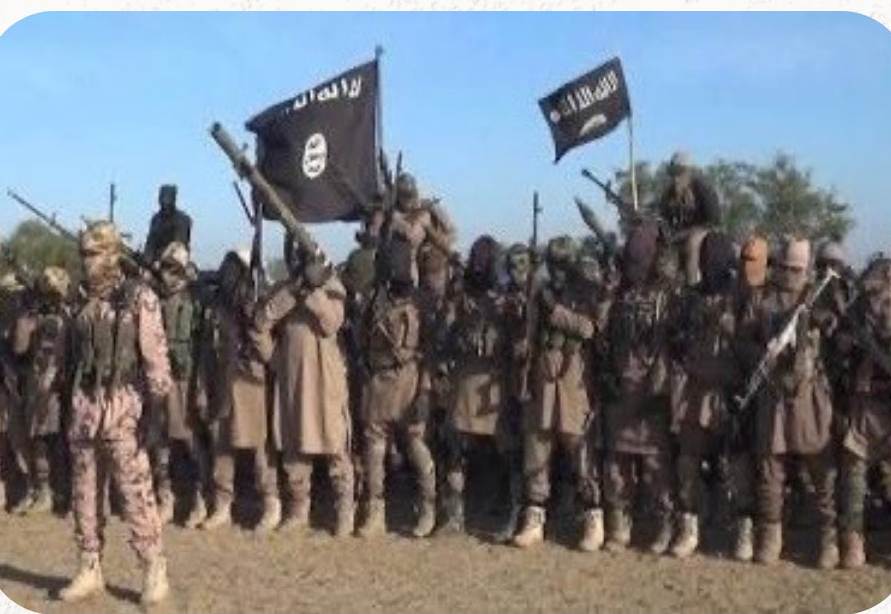
A leadership crisis may be unfolding within the Islamic State West Africa Province (ISWAP) after senior commander Ba’a Shuwa reportedly showed reluctance to accept a top leadership position allegedly offered by the Islamic State’s central command following the death of key commander Abubakar Mainok.
According to security sources cited by counterterrorism analyst Zagazola Makama, the development emerged after Mainok, also known as Abu Bilal al-Mainuki or Abbor Mainok, was reportedly killed during a recent joint counterterrorism operation involving Nigerian and United States forces.
The strike is believed to have dealt a major blow to ISWAP’s command structure, disrupting both operational coordination and media activities across the Lake Chad Basin.
Sources familiar with the matter said ISIS central leadership moved quickly to identify a replacement capable of preserving command continuity within the terrorist organisation. Ba’a Shuwa reportedly emerged among the leading candidates for a broader leadership role.
“The leadership position was reportedly hinted at to Ba’a Shuwa by ISIS central command in Iraq following the elimination of Mainok. However, available intelligence indicates that he is reluctant to take up the role at this time,” a source familiar with the development was quoted as saying.
Security officials reportedly attribute the hesitation to increasing military pressure on terrorist leaders operating across the Lake Chad region, where intelligence-led operations and targeted strikes have intensified in recent months.
Mainok’s reported death is widely regarded by security analysts as one of the most significant setbacks suffered by ISWAP in recent years. Beyond commanding military operations across Nigeria, Niger, Chad and Cameroon, he was reportedly responsible for propaganda coordination, media operations and strategic links with the wider ISIS network.
In a rare move, ISWAP publicly acknowledged Mainok’s death in a statement released through its media channels on May 28. Analysts interpreted the admission as evidence of the importance of the slain commander within the organisation.
The group claimed that American forces monitored Mainok for approximately six months through drone surveillance before carrying out coordinated strikes on multiple locations. ISWAP also questioned the scale of resources deployed against a single individual, describing the operation as disproportionate.
According to the statement, a media facility in the Lake Chad forests was among the sites targeted. Those reportedly killed included Mainok, members of the group’s ILANI media network, several foreign ISIS fighters and other associates.
Despite the reported destruction of the facility, ISWAP has continued publishing propaganda through platforms including AMAQ and the al-Naba magazine.
Security analysts noted that the statement marked the first known public acknowledgment by ISWAP of a senior leader being killed in an operation involving direct U.S. military participation.
Open-source intelligence estimates suggest that up to 175 fighters may have been killed during the strikes, although the group did not disclose casualty figures.
Areas reportedly affected include Garin Abu Bilal (Sahel), Garin Ba Bunu west of Mangari, Satir-Kanama and Kwatan Fulani.
Sources further revealed that ISIS leadership has become increasingly concerned about maintaining organisational stability following the loss of several senior figures. Discussions are reportedly underway regarding a new location for the group’s al-Furqan media headquarters after facilities in the Lake Chad region were allegedly destroyed.
“The apparent reluctance of Ba’a Shuwa to step into the role has added to the uncertainty,” another source reportedly said, pointing to internal disagreements over succession and the future direction of the organisation.
The uncertainty could deepen existing rivalries among commanders and factions within ISWAP, potentially weakening coordination among cells operating across the Lake Chad Basin and neighbouring border regions. Security sources also reported that some fighters have begun abandoning traditional strongholds amid fears of additional military offensives.
“The issue is not merely replacing a commander. Mainok occupied a unique position that combined operational authority, media oversight, ideological influence, and links to ISIS central leadership. Such individuals are difficult to replace,” a source said.
While the reported leadership vacuum may create short-term challenges for the group, security experts caution that ISWAP remains a formidable insurgent organisation capable of reorganising, adapting and sustaining operations despite major losses.
Source: SaharaReporters, citing security sources and counterterrorism analyst Zagazola Makama.
