
By CHARLES CHIJIOKE
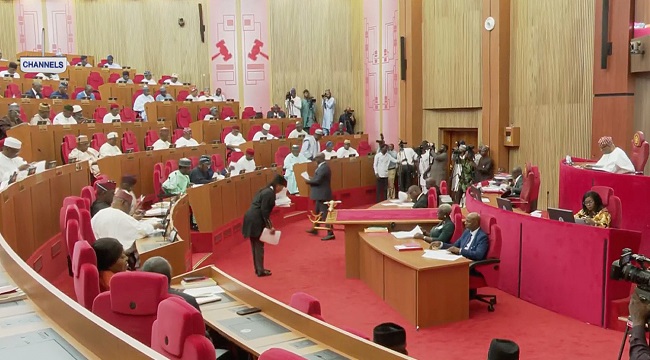
Nigeria’s Senate on Thursday passed the ₦2.2 trillion 2026 appropriation bill for the Federal Capital Territory (FCT), with lawmakers approving a spending framework heavily tilted toward infrastructure and capital development.
The budget, which scaled third reading during plenary after the presentation of the report by the Senate Committee on the FCT, allocates about ₦1.7 trillion — representing 76 per cent of the total proposal — to capital projects.
The approval signals one of the largest budgetary commitments ever made for the nation’s capital, amid ongoing efforts by the FCT Administration to expand road networks, improve satellite towns, and execute major urban renewal projects across Abuja.
Despite broad support for the bill, several senators raised concerns over the revenue assumptions backing the massive expenditure plan.
Senator Sani Musa and the Senate Chief Whip questioned the transparency of the funding structure, insisting that lawmakers and Nigerians deserve a clearer breakdown of the FCT’s expected revenue streams and financing sources.
They argued that disclosing detailed revenue projections would strengthen public confidence and improve accountability in the management of public resources.
Speaking during deliberations, the lawmakers stressed that approving such a large budget without adequate explanation of projected inflows could expose the implementation process to scrutiny and fiscal uncertainty.
Senate President Godswill Akpabio aligned himself with the concerns raised on the floor, emphasizing that accountability and transparency must remain central to the execution of the 2026 FCT budget.
“The importance of accountability in the implementation of the budget cannot be overemphasized,” the Senate President reportedly stated during plenary.
The passage of the budget is expected to accelerate key infrastructure projects in the FCT, particularly in transportation, housing, and public utilities. However, analysts say the Senate’s concerns over revenue generation may increase pressure on the FCT Administration to provide periodic disclosures on internally generated revenue, statutory allocations, and borrowing plans tied to the budget.
The development also comes at a time when scrutiny over public spending and debt sustainability continues to dominate national economic conversations, especially as the Federal Government pushes aggressive infrastructure expansion amid fiscal pressures.
The approved bill now awaits implementation by the FCT Administration under Minister Nyesom Wike, with expectations that the capital-heavy allocation could significantly reshape infrastructure delivery across Abuja and adjoining communities.
